The Horse Meme, Explained
How a niche internet joke turned into a brand misstep for Duolingo

Welcome to the first edition of The Daily Scroll.
This is a newsletter where I break down trends happening online so you don’t get lost in the ever-evolving internet. Alongside that, I analyze these moments from a brand perspective and offer guidance on whether participating is worth it, or a fast track to a PR headache.
Speaking of which, today we’re diving into the horse meme that was perceived by some as racially insensitive when Duolingo joined in, especially outside the chronically online bubble.
First off: the meme
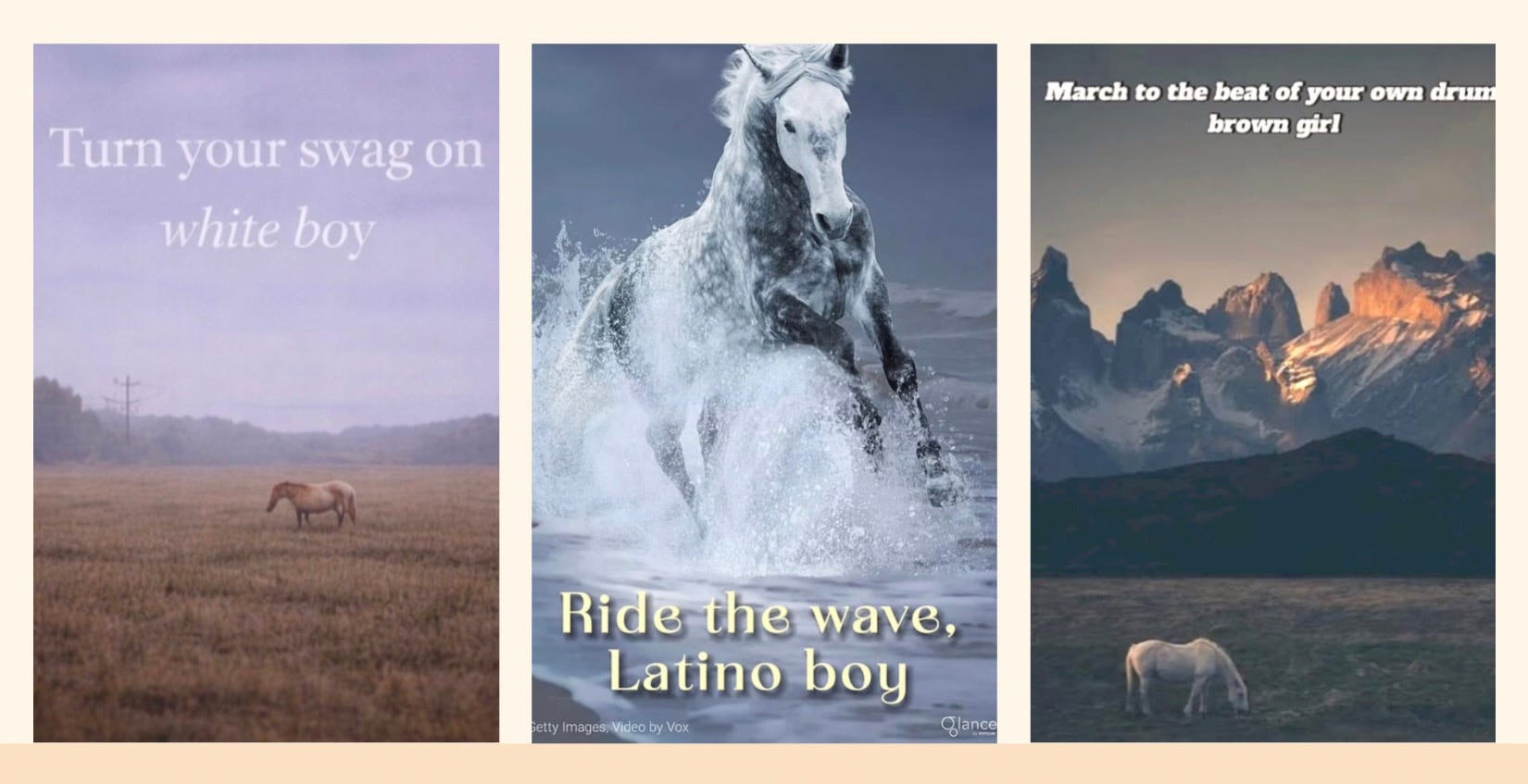
There’s currently a trend circulating on TikTok and Instagram featuring static images paired with short, overly specific statements. These posts are designed to be shared directly with friends, usually as a joke or a playful callout, rather than used as reaction images. Their shareability helps drive reach and visibility as people send them to friends who either fit the referenced demographic or, in some cases, very clearly don’t.
While variations of this format have appeared in previous years, the exact origin of the meme is still debated. Some users attribute this version to TikTok creator StokesCroaks.
Timeliness: On the rise
The trend began gaining traction in niche communities during the first week of the year and has since picked up momentum as more demographics are added.
The format:
Affirmations or statements directed at a very specific demographic, paired with a majestic image of a horse in the background.
Standard formula:
[Insert message], [ethnicity] [gender]
Platforms:
Primarily TikTok and Instagram.
Should brands participate?
It depends heavily on your brand voice and audience. If you do participate, it is critical to avoid grouping demographics with stereotypes. For global brands especially, featuring more than one demographic matters. Highlighting only one group can easily be interpreted as exclusionary or targeted, even when the intent is neutral.
This isn’t about intent or wrongdoing. It’s about how context collapse changes reception once a joke leaves its original audience.
Why Duolingo, Why: The incident
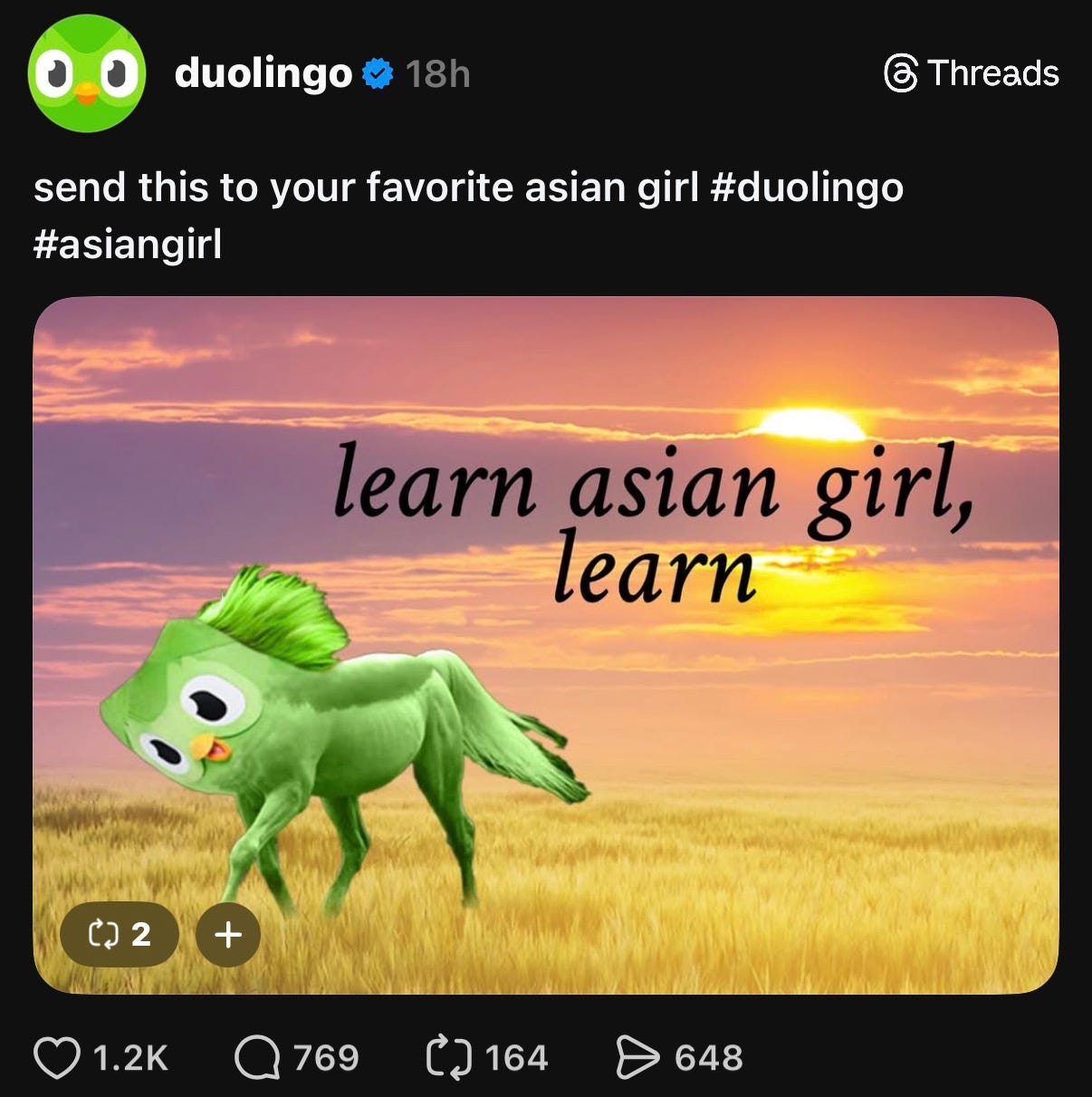
In mid-January 2026, Duolingo joined the trend with its own version of the meme, stylized in its signature brand voice. The brand essentially “Duolingo-fied” the horse. Users familiar with the trend largely understood the joke, but many others interpreted the post as racially insensitive.
Out of context, the post appeared to single out Asians, a group already burdened by longstanding stereotypes around academic performance, with messaging about learning. For audiences unfamiliar with the trend’s format, this framing amplified negative reactions.
Platform choice also played a role. Different platforms have different cultures, humor thresholds, and levels of trend literacy. Because this meme had not yet reached widespread adoption, Duolingo took a risk by deploying it on a platform where the format was not fully established. Audience reception may have been very different had the post first appeared on TikTok or Instagram, where the trend was already better understood.
In conclusion:
The post likely would have landed more favorably if it had been shared on a platform where the trend was already familiar and if it had featured multiple demographics. Duolingo positions itself as a global, multicultural brand, and in moments like this, context and timing matter just as much as creativity.
Internet trends move fast, but brand context moves slower. If you do not fully understand where a joke comes from, it is risky to be the first major brand telling it.